How to Pour Champagne

Technique Meets Pleasure

Pouring champagne is more than a practical gesture. It reflects a philosophy Madame Clicquot herself embraced: "Our wines must flatter both the palate and the eye." The way you pour champagne directly influences its aromatic expression, the liveliness of its bubbles, and the pleasure of the first sip. Understanding proper technique transforms serving champagne from a routine task into an expression of style and attention to detail.

Key Takeaways

• Scientific research supports tilting the glass slightly to preserve more gas and reduce foam.

• Holding the bottle by the punt provides optimal control during pouring.

• Temperature plays a crucial role: well-chilled champagne pours with less foam and better bubble retention.

• Glass shape matters: a tulip glass concentrates aromatic expression while keeping bubbles active longer than a narrow flute or wide coupe..

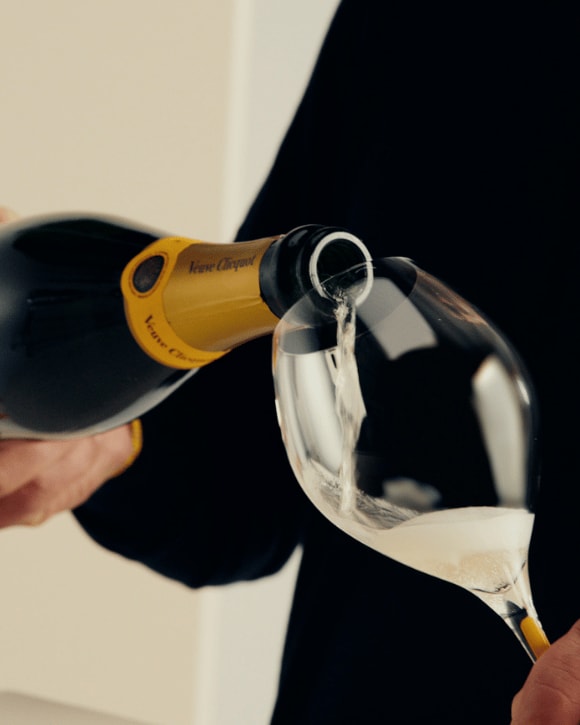
Veuve Clicquot Champagne being poured into a flute
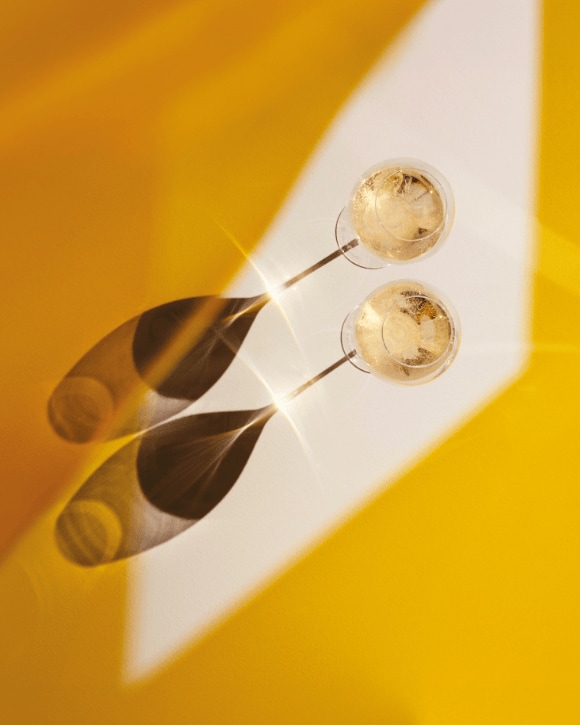
Two glasses of Veuve Clicquot Champagne glasses viewed from above
What Is the Best Way to Hold the Bottle When Pouring?

Confidence begins with how you hold the bottle. Insert your thumb into the punt (the indentation at the base) and spread your fingers along the bottom for stability. This grip offers control without awkwardness, allowing you to tilt the bottle smoothly and pour with precision. Some prefer supporting the neck with their free hand, particularly when opening a bottle of champagne and transitioning to the pour.

This technique keeps your hand away from the bottle's body, preventing unnecessary warming. Remember, champagne reveals its finest qualities when served at the right temperature, typically between 46°F and 50°F for non-vintage cuvées like Veuve Clicquot Brut Yellow Label, and between 50°F and 54°F for vintage cuvées like La Grande Dame 2018.

Should You Tilt the Glass When Pouring Champagne?

The debate between traditional straight-glass pouring and the tilted approach has sparked conversation for decades. Both methods have merit, yet recent findings offer clarity on which preserves champagne's character most effectively. In fact research1 demonstrates that champagne poured down the side of a tilted glass retains more dissolved carbon dioxide and produces significantly less foam compared to pouring straight down into an upright glass. This beer-style approach respects the wine's aromatic complexity by minimizing turbulence during the pour.

The technique itself is straightforward: 

  1. Tilt the glass at a gentle angle, approximately 45 degrees;
  2. Pour slowly down the side, allowing the champagne to slide smoothly into the glass;
  3. Begin with a small amount to wet the glass surface, then pause briefly. This initial pour creates a foundation that reduces foam when you continue;
  4. Fill the glass only halfway to two-thirds full, preserving the wine's freshness and preventing it from warming before you finish.

For those who prefer the traditional vertical pour, the same principle applies: pour slowly in two stages, letting bubbles settle between pours.

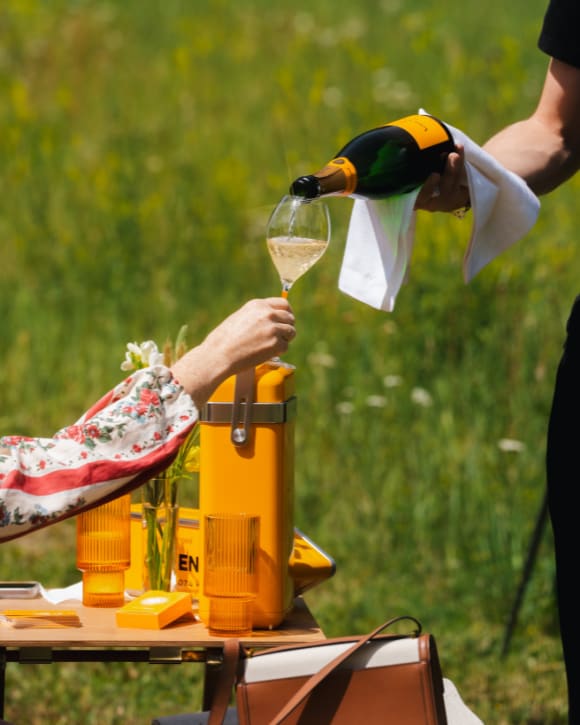
Champagne being poured in a picnic outdoor setting
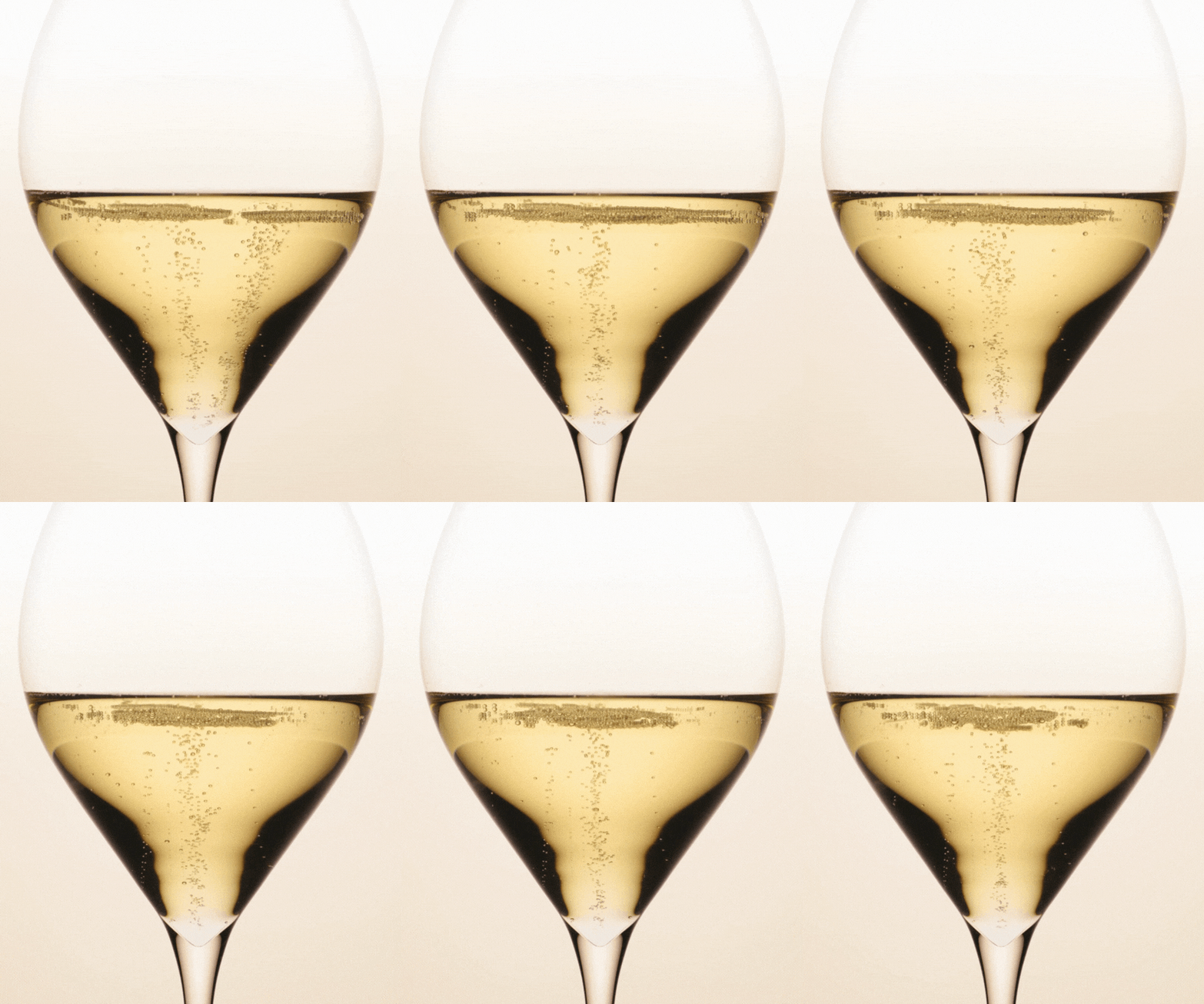
A glass of bubbly Champagne
What Common Mistakes Should You Avoid When Pouring Champagne?

Several missteps can compromise the wine's expression before it ever reaches your palate:

  1. Pouring too quickly generates excessive foam, causing precious aromatic compounds to escape before you experience them;
  2. Overfilling the glass is another frequent error. A glass filled to the brim warms rapidly and offers no room for the wine's aromatics to develop. Fill it only halfway for optimal enjoyment;
  3. Proper temperature matters profoundly. Champagne that isn't properly chilled will foam excessively, making it nearly impossible to control.
  4. Choosing the wrong glass undermines both the aromatic experience and bubble retention. A tulip-shaped concentrates the wine's freshness and fruity complexity more effectively than a narrow flute or wide coupe.

How Does Temperature Affect the Pouring Experience?

Cold champagne is stable champagne. Lower temperatures slow the release of carbon dioxide, giving you greater control when pouring. The bubbles emerge steadily rather than explosively, creating that signature gentle mousse. Well-chilled champagne also reveals its aromatic precision more clearly, allowing you to appreciate the wine's complexity.

For champagnes designed for alternative serving styles, temperature plays an even more dynamic role. Veuve Clicquot RICH and RICH Rosé are crafted to be served on ice, where extreme cold transforms the tasting experience entirely, revealing fresh, fruity aromatics through a smooth, indulgent texture.


🛈 Losses of Dissolved CO2 during Champagne Serving

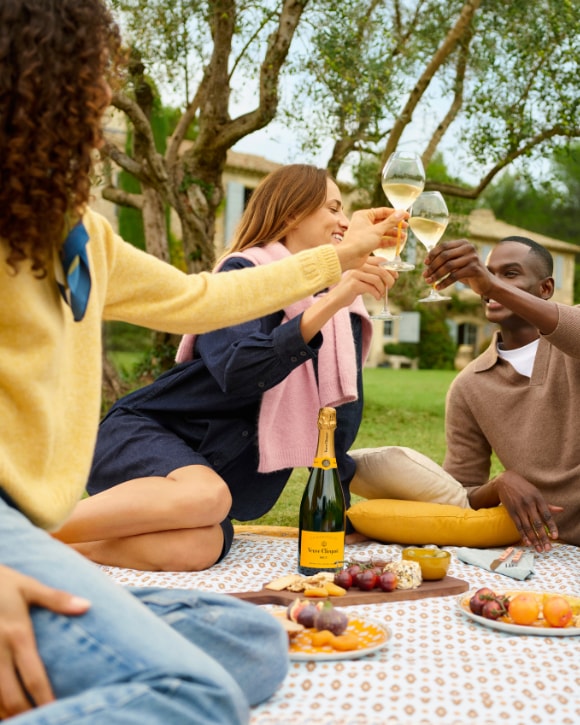
Friends sharing Veuve Clicquot champagne at an outdoor picnic event